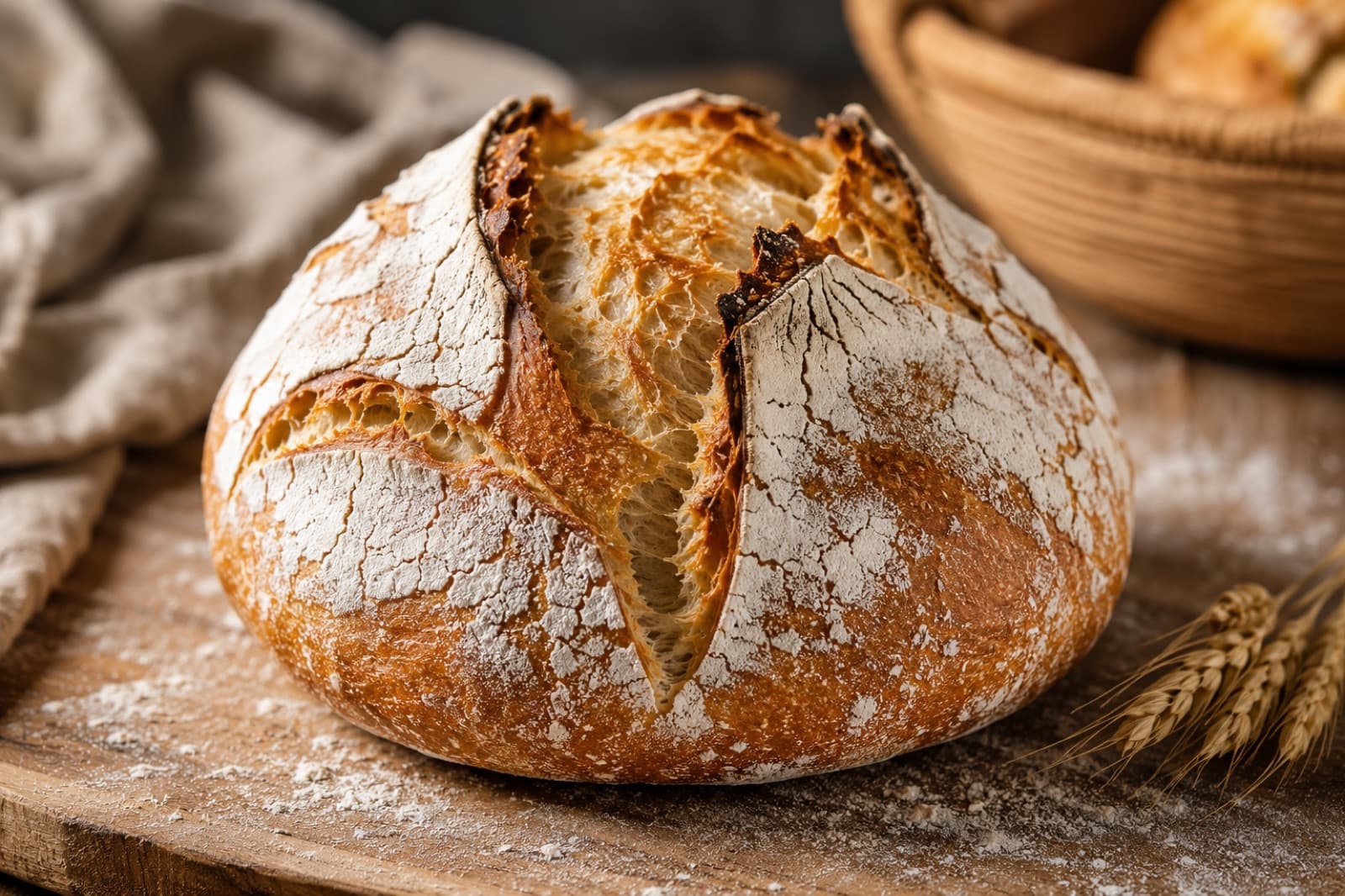
Sourdough Naan
Soft, blistered flatbread for curries, dips, and impromptu sandwiches. Flatbreads are forgiving and quick, making them the perfect entry point for new sourdough bakers.
Focaccia is the recipe I make when I want to feel like a baker without committing to a 36-hour cold proof. Mix in the morning, bake at dinner. Pillowy crumb, blistered crust, ten minutes of work spread across a leisurely afternoon.
Ingredients
Dough
- 500g bread flour (00 flour for pizza)
- 375g water (75% hydration)
- 10g fine sea salt
- 100g active sourdough starter
- 30g extra-virgin olive oil
Finishing
- Olive oil for drizzling
- Flaky sea salt
- Toppings of your choice
Method
- 1
Mix
Combine flour, water, levain, salt, and olive oil. Mix until shaggy, then rest 30 minutes.
- 2
Bulk ferment with folds
Perform three sets of coil folds at 30-minute intervals over 3–4 hours, until the dough is airy and jiggly.
- 3
Pan and proof
Stretch into an oiled pan or shape on a peel. Rest 1–2 hours until soft and pillowy.
- 4
Top and bake
Dimple, drizzle generously with olive oil, top as desired, and bake at 475°F until golden, 18–22 minutes.
Sarah's Tips
- Don't degas during shaping — the bubbles are the point.
- Use a baking steel or stone for the closest-to-pizzeria results.
- Olive oil at the bottom of the pan creates that bakery-style crisp underside.
Substitutions
Not everything has to come from the recipe list. Here's what swaps cleanly and what to watch for when you make a change.
Any neutral oil works for the dough. For the pan and topping, use the best olive oil you have — that's what you'll taste.
00 flour (the Italian pizza flour) gives a more tender, airy result. Caputo Pizzeria is the standard.
Higher hydration (80%) → bigger, more open holes. Lower (70%) → tighter and easier to handle. Start at 75%.
What can go wrong
Every bake fails differently. Here are the three problems most likely to show up on this recipe — and how to recover.
Flat, dense focaccia
Did you degas during shaping? Don't. Transfer the bulk-fermented dough gently — preserve every bubble.
Soggy bottom
Olive oil at the bottom of the pan should pool slightly when you dimple. Bake on a low rack with the oven preheated to 475°F to crisp the underside.
Toppings burn before dough cooks
Add delicate toppings (fresh herbs, soft cheese) in the last 5 minutes. Sturdy toppings (potato, tomato) go on at the start.
Trouble with the starter itself? Read the troubleshooting library →
Variations to try
Once you've baked the base recipe a few times, these are the riffs worth chasing.
- Top with seasonal vegetables: thin-sliced potato and rosemary, cherry tomatoes and basil, grapes in late summer.
- Make a half-sheet focaccia for a thicker, more bread-like result. Use a quarter-sheet for crispier flatbreads.
- Brush with garlic-infused olive oil and finish with flaky salt and lemon zest right out of the oven.
Frequently asked
Do I need a pizza stone?
For pizza, yes — a stone or steel is the single biggest upgrade. For focaccia, a regular sheet pan works perfectly.
Why is my focaccia dense?
You probably degassed the dough during shaping. Spread it gently into the pan; preserve every bubble. The bubbles are the bread.
Can I make this gluten-free?
Sourdough flatbreads adapt better to gluten-free flours than enriched loaves do. Use a 1:1 GF blend with xanthan gum and expect a more cake-like texture.
Take this recipe anywhere.
Download a portable .sourdoughrecipefile — the full ingredient list, every method step, your scaling, all packed into a few kilobytes. Open it in the Sarah's Sourdough iOS app, edit it, AirDrop it to a friend who bakes. The recipe travels with you.
Bake this with timers, scaling, and peak alerts.
Step-by-step timers that pause when you do. Dough-weight scaling rewrites every gram. Peak detection so you mix at the right moment. Log the bake when you're done.
No subscription. No ads. Yours forever.
You might also like
Pockets that puff dramatically in a hot oven. Great for stuffing.
Thin, crisp Armenian flatbread ideal for wraps or breaking into crackers.
Pillowy, herb-scented focaccia that disappears within minutes of coming out of the oven.