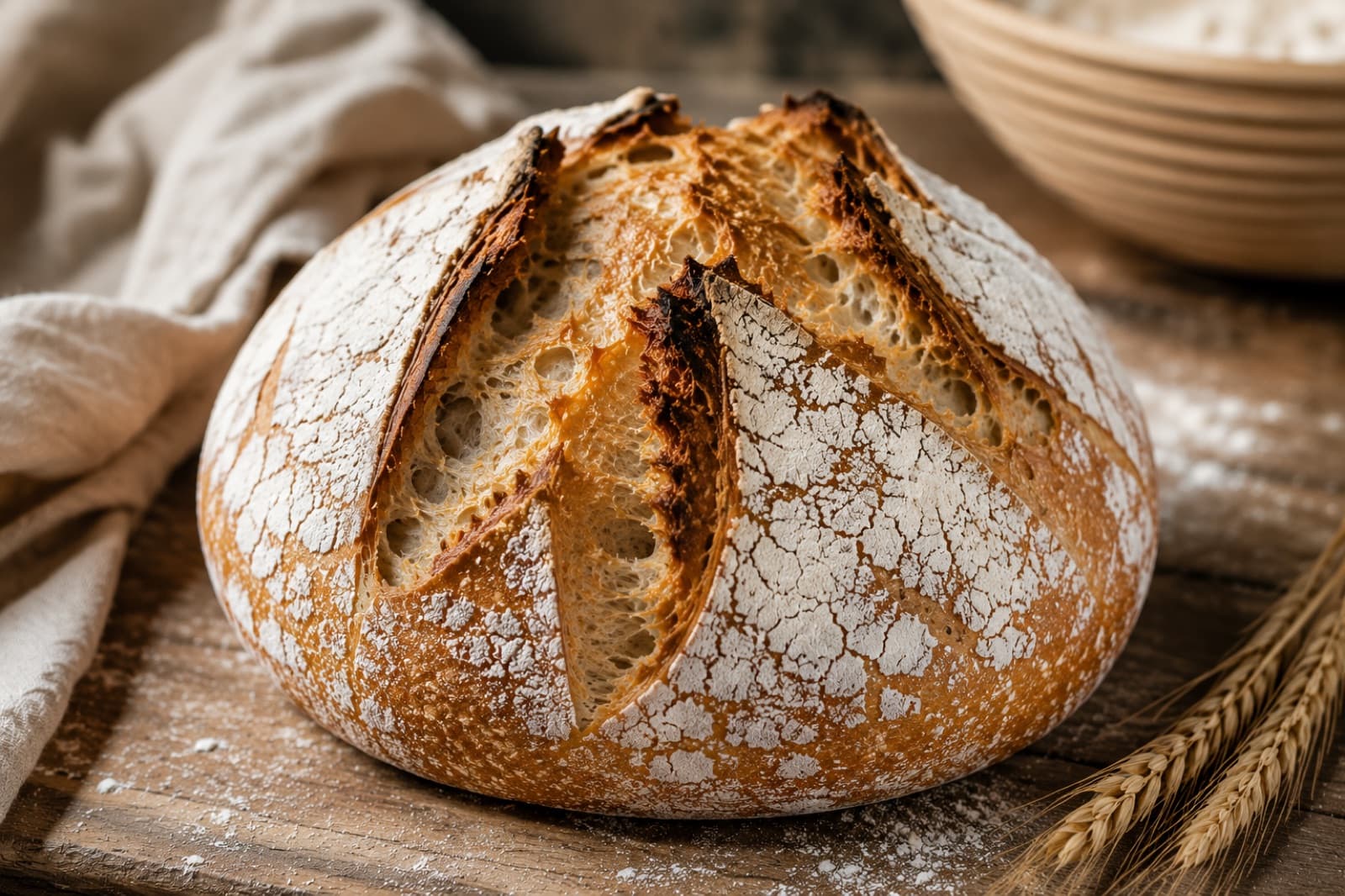
Sesame Sourdough
Toasted sesame folded through the crumb. Nutty, fragrant, addictive. This recipe is a Sarah's kitchen staple — reliable, repeatable, and forgiving of small mistakes.
There's something about a seeded crust that turns an ordinary loaf into a gift. I started seeded bakes when I had a windowsill of toasted-and-forgotten seeds and needed to use them up. They've been a fixture ever since.
Ingredients
Dough
- 500g bread flour
- 350g water (70% hydration)
- 10g fine sea salt
- 100g active sourdough starter (levain)
- 50g mixed seeds (sesame, sunflower, flax, poppy)
Topping
- Additional seed mix for crust
- Egg wash or water to adhere
Method
- 1
Feed your starter
8–12 hours before mixing, refresh your starter so it doubles by the time you mix. A ripe, bubbly levain is non-negotiable for good rise.
- 2
Autolyse
Combine flour and water (hold back ~25g for the salt). Cover and rest 30–60 minutes so the flour fully hydrates.
- 3
Mix and rest
Add the levain and salt with the reserved water. Pinch and fold until smooth. Rest 30 minutes.
- 4
Bulk fermentation
Over 4–5 hours at 75°F, perform four sets of stretch-and-folds at 30-minute intervals. The dough is ready when it's smooth, jiggly, and 30–50% larger.
- 5
Shape
Pre-shape into a loose round, rest 20 minutes, then final-shape into a boule or batard. Place seam-up in a floured banneton.
- 6
Cold proof
Refrigerate 12–24 hours. The cold develops flavor and makes scoring easier.
- 7
Bake
Preheat a Dutch oven at 500°F for one hour. Turn the loaf out, score, and bake covered for 20 minutes, then uncovered at 450°F for 20–25 minutes until deeply browned.
Sarah's Tips
- Soak hard seeds (flax, chia, sunflower) in warm water 1–2 hours before adding.
- Toast seeds for the topping just before applying to keep them crunchy.
- Egg wash helps seeds adhere better than water.
Substitutions
Not everything has to come from the recipe list. Here's what swaps cleanly and what to watch for when you make a change.
Poppy, sunflower, or flax are interchangeable. Toast all seeds before mixing — raw seeds taste raw in the finished loaf.
Pumpkin seeds (pepitas) bring a meatier chew. Roast lightly first.
A single seed at 50g works fine. Combinations are more interesting but more is not better — 75g+ starts to break the crumb structure.
What can go wrong
Every bake fails differently. Here are the three problems most likely to show up on this recipe — and how to recover.
Seeds fall off the crust
Brush the loaf with water (or egg wash) before pressing into the seed coating. Apply seeds to the wet surface, then proof seed-side down in the banneton.
Bitter seed flavor
Raw seeds taste raw. Toast in a dry skillet over medium heat until fragrant — 3–5 minutes, shaking constantly.
Coating burns before crumb bakes
Cover with foil for the last 10 minutes if the seeded crust browns too fast.
Trouble with the starter itself? Read the troubleshooting library →
Variations to try
Once you've baked the base recipe a few times, these are the riffs worth chasing.
- Roll the loaf in a mixed-seed coating before the final proof for a fully-encrusted crust.
- Add 30g of sprouted seeds for chewy, sweet pockets.
- Switch the seed mix to match the season: pumpkin and sunflower in fall, sesame and nigella in spring.
Frequently asked
Do I have to toast the seeds first?
For flavor, yes. Raw seeds taste raw — toasted ones bring real character. Toast in a dry skillet over medium heat for 3–5 minutes, shaking until fragrant.
Will the seeds make the dough drier?
Not significantly if added at the third fold and patted dry. If you soak seeds first (flax, chia), drain them well — they otherwise add water.
Can I use a single seed instead of a mix?
Absolutely. 50g of just sesame, sunflower, or pumpkin seeds works beautifully. Mixes are nice but not necessary.
Take this recipe anywhere.
Download a portable .sourdoughrecipefile — the full ingredient list, every method step, your scaling, all packed into a few kilobytes. Open it in the Sarah's Sourdough iOS app, edit it, AirDrop it to a friend who bakes. The recipe travels with you.
Bake this with timers, scaling, and peak alerts.
Step-by-step timers that pause when you do. Dough-weight scaling rewrites every gram. Peak detection so you mix at the right moment. Log the bake when you're done.
No subscription. No ads. Yours forever.