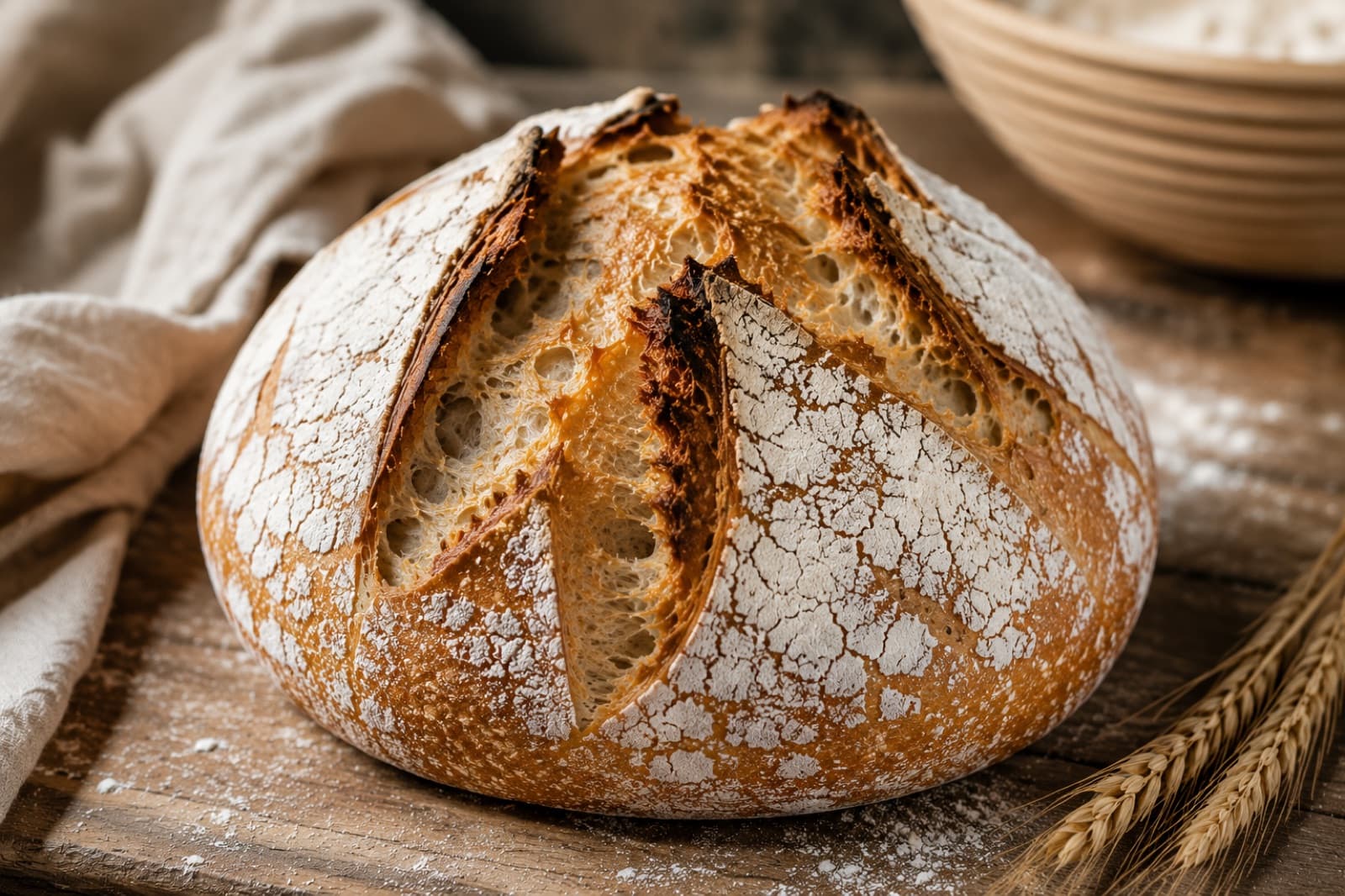
Maple Walnut Sourdough
Pure maple syrup and toasted walnuts. Tastes like a Vermont morning. This recipe is a Sarah's kitchen staple — reliable, repeatable, and forgiving of small mistakes.
Flavored loaves are where sourdough starts to feel personal. The base is humble — flour, water, salt, starter — but the inclusions are entirely yours. This is the recipe that taught me that.
Ingredients
Dough
- 500g bread flour
- 350g water (70% hydration)
- 10g fine sea salt
- 100g active sourdough starter (levain)
Inclusions
- See recipe note above for specific add-ins, typically 100–200g total
Method
- 1
Feed your starter
8–12 hours before mixing, refresh your starter so it doubles by the time you mix. A ripe, bubbly levain is non-negotiable for good rise.
- 2
Autolyse
Combine flour and water (hold back ~25g for the salt). Cover and rest 30–60 minutes so the flour fully hydrates.
- 3
Mix and rest
Add the levain and salt with the reserved water. Pinch and fold until smooth. Rest 30 minutes.
- 4
Bulk fermentation
Over 4–5 hours at 75°F, perform four sets of stretch-and-folds at 30-minute intervals. The dough is ready when it's smooth, jiggly, and 30–50% larger.
- 5
Shape
Pre-shape into a loose round, rest 20 minutes, then final-shape into a boule or batard. Place seam-up in a floured banneton.
- 6
Cold proof
Refrigerate 12–24 hours. The cold develops flavor and makes scoring easier.
- 7
Bake
Preheat a Dutch oven at 500°F for one hour. Turn the loaf out, score, and bake covered for 20 minutes, then uncovered at 450°F for 20–25 minutes until deeply browned.
Sarah's Tips
- Add inclusions during the second fold so they distribute evenly.
- Pat moist inclusions (olives, sun-dried tomatoes) dry — water content affects rise.
- Cheese inclusions like a slightly cooler oven so they don't burn before the crust sets.
Substitutions
Not everything has to come from the recipe list. Here's what swaps cleanly and what to watch for when you make a change.
Most inclusions slot in around 100g (about 20% of flour weight). Pat moist ingredients (olives, sun-dried tomatoes) very dry before folding in.
Cube hard cheeses (cheddar, gruyere) rather than shredding — pockets melt beautifully and don't burn. Use 10°F cooler oven if the loaf is cheese-heavy.
Soak raisins, cranberries, or apricots in warm water or tea for 10 minutes, then drain. Skipping this step means the fruit pulls moisture from your crumb.
What can go wrong
Every bake fails differently. Here are the three problems most likely to show up on this recipe — and how to recover.
Inclusions sink to the bottom
Add them at the third stretch-and-fold, not at initial mix. Distribute evenly and gently — overworking the dough at this point causes inclusions to break and bleed color.
Wet patches around inclusions
Pat olives, sun-dried tomatoes, and cheese very dry. A few minutes between paper towels removes shocking amounts of water.
Burnt cheese on the crust
Cubes don't surface. Shreds do, and they burn. If you must use shredded cheese, mix it 50/50 with cubed and tuck shreds away from the surface during shaping.
Trouble with the starter itself? Read the troubleshooting library →
Variations to try
Once you've baked the base recipe a few times, these are the riffs worth chasing.
- Swap the dominant flavor: rosemary ↔ thyme, olives ↔ sun-dried tomatoes, cheddar ↔ asiago.
- Add a third flavor at a third the amount — caramelized onion in a cheese loaf, lemon zest with rosemary.
- Make a swirl version: roll the dough flat, spread a paste (pesto, tapenade), and re-roll before final proof.
Frequently asked
When during the process do I add the inclusions?
At the third stretch-and-fold, after the dough has built strength but before it's tight. Stretch the dough flat, dot the inclusions across, and fold them in evenly.
How much inclusion is too much?
Past 200g per 500g of flour, the crumb starts to break down. 100g is a great sweet spot for most inclusions.
Can I use frozen inclusions?
Yes — and it can actually help with juicy ones (cherries, plums). Thaw and pat dry, but the partial-freeze prevents bleeding into the crumb.
Take this recipe anywhere.
Download a portable .sourdoughrecipefile — the full ingredient list, every method step, your scaling, all packed into a few kilobytes. Open it in the Sarah's Sourdough iOS app, edit it, AirDrop it to a friend who bakes. The recipe travels with you.
Bake this with timers, scaling, and peak alerts.
Step-by-step timers that pause when you do. Dough-weight scaling rewrites every gram. Peak detection so you mix at the right moment. Log the bake when you're done.
No subscription. No ads. Yours forever.