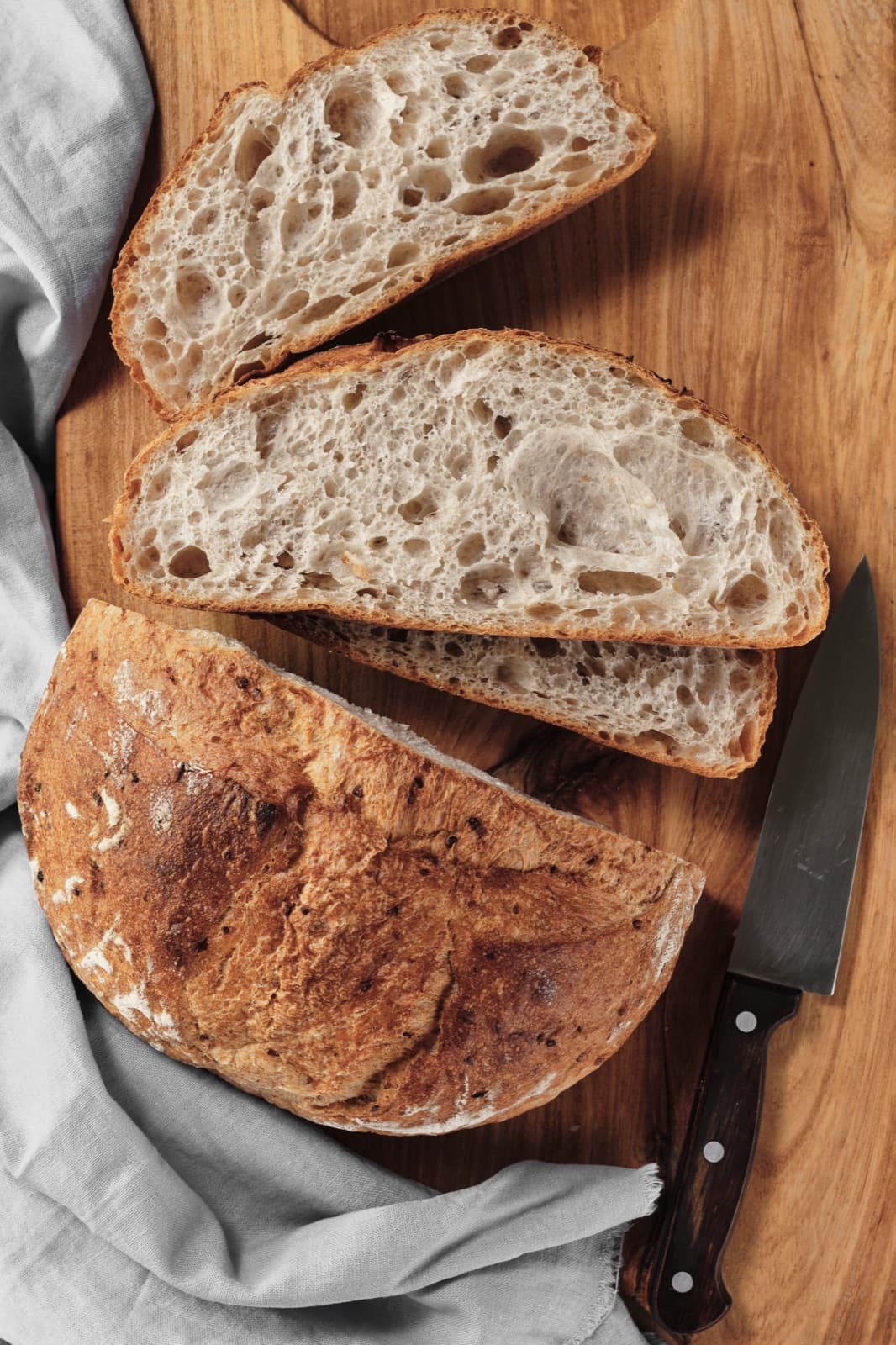
Hot Buttered Rum Loaf
Brown sugar, cinnamon, and a generous splash of dark rum. Built around the produce of the moment, this is the kind of recipe you bake once a year and remember forever.
I bake seasonally because produce reminds me what time of year it is. This loaf is a calendar — make it when the ingredients are at their best and you'll taste the season.
Ingredients
Dough
- 500g bread flour
- 350g water (70% hydration)
- 10g fine sea salt
- 100g active sourdough starter (levain)
- 100–150g seasonal addition (puréed pumpkin, reduced cider, etc.)
- 1–2 tsp warm spices appropriate to the recipe
Method
- 1
Feed your starter
8–12 hours before mixing, refresh your starter so it doubles by the time you mix. A ripe, bubbly levain is non-negotiable for good rise.
- 2
Autolyse
Combine flour and water (hold back ~25g for the salt). Cover and rest 30–60 minutes so the flour fully hydrates.
- 3
Mix and rest
Add the levain and salt with the reserved water. Pinch and fold until smooth. Rest 30 minutes.
- 4
Bulk fermentation
Over 4–5 hours at 75°F, perform four sets of stretch-and-folds at 30-minute intervals. The dough is ready when it's smooth, jiggly, and 30–50% larger.
- 5
Shape
Pre-shape into a loose round, rest 20 minutes, then final-shape into a boule or batard. Place seam-up in a floured banneton.
- 6
Cold proof
Refrigerate 12–24 hours. The cold develops flavor and makes scoring easier.
- 7
Bake
Preheat a Dutch oven at 500°F for one hour. Turn the loaf out, score, and bake covered for 20 minutes, then uncovered at 450°F for 20–25 minutes until deeply browned.
Sarah's Tips
- Reduce fruit juice or cider to concentrate flavor without adding excess water.
- Use spice blends sparingly — they bloom over the long ferment.
- Dried fruits soaked in a splash of rum or tea won't suck moisture from your dough.
Substitutions
Not everything has to come from the recipe list. Here's what swaps cleanly and what to watch for when you make a change.
Reduce fruit juices (cider, citrus) by simmering to concentrate flavor without adding excess liquid. Roast vegetables (pumpkin, sweet potato) until water has cooked out.
Pre-made blends (pumpkin pie spice, garam masala) work in a pinch. Whole spices bloomed in warm butter taste fresher than ground.
What can go wrong
Every bake fails differently. Here are the three problems most likely to show up on this recipe — and how to recover.
Loaf is too wet from added produce
Cook seasonal additions down first. Roasted pumpkin should be drained on paper towels; cider should be reduced to half before adding.
Spice flavor is muted
Bloom whole spices in warm butter or oil before mixing in. Ground spices lose intensity over a long ferment — toast them dry first.
Fruit makes the dough collapse
Too much. Cap fresh fruit at 80g per 500g of flour. Dried fruit at 100g. More gets gummy.
Trouble with the starter itself? Read the troubleshooting library →
Variations to try
Once you've baked the base recipe a few times, these are the riffs worth chasing.
- Pair with seasonal compound butters: cranberry-orange in winter, lemon-thyme in spring.
- Make miniature versions in a muffin tin for breakfast or party trays.
- Add a glaze on cooled loaves: simple syrup, citrus zest icing, or a thin coffee glaze for autumn breads.
Frequently asked
Can I make this out of season?
Yes — frozen or roasted-and-stored produce works fine. Pumpkin purée, frozen berries, and roasted apples all keep their flavor through winter freezing.
How much of the seasonal ingredient is too much?
Up to 20% of flour weight as a purée or 30% as chopped/diced. More than that and the dough struggles to develop structure.
Take this recipe anywhere.
Download a portable .sourdoughrecipefile — the full ingredient list, every method step, your scaling, all packed into a few kilobytes. Open it in the Sarah's Sourdough iOS app, edit it, AirDrop it to a friend who bakes. The recipe travels with you.
Bake this with timers, scaling, and peak alerts.
Step-by-step timers that pause when you do. Dough-weight scaling rewrites every gram. Peak detection so you mix at the right moment. Log the bake when you're done.
No subscription. No ads. Yours forever.