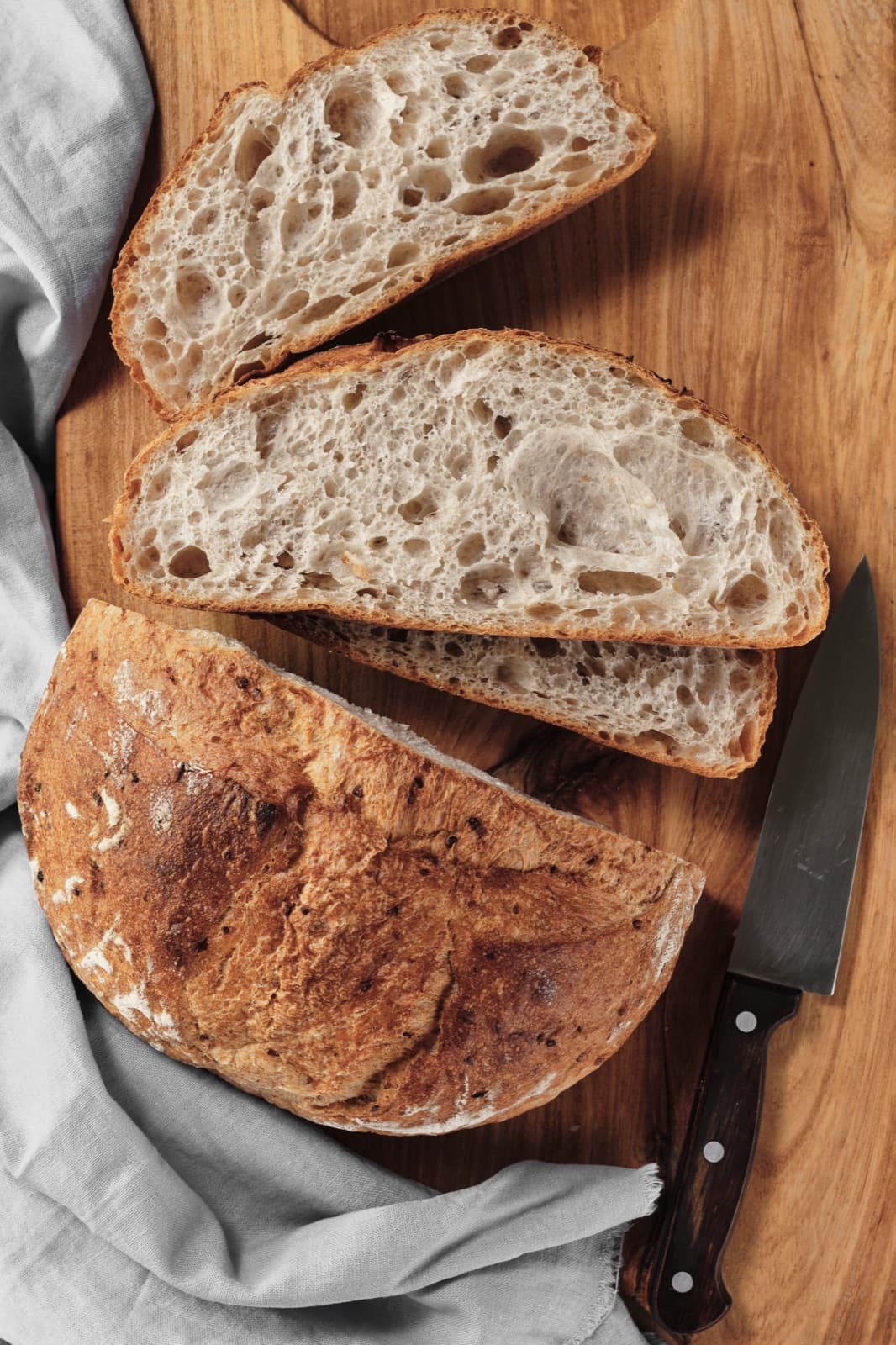
100% Whole Wheat Sourdough
All-wheat and proudly so. Dense, deep, and packed with character. Whole-grain doughs reward you with deeper flavor and better nutrition, but they want a little more water and a little more time.
Whole-grain loaves taught me to slow down. They want more water, more time, and a little more attention than a white-flour boule. The payoff is a loaf with real depth — nutty, mildly sweet, and impossibly satisfying.
Ingredients
Dough
- 350g bread flour
- 150g whole wheat or rye flour
- 375g water (75% hydration)
- 10g fine sea salt
- 100g active starter
Method
- 1
Feed your starter
8–12 hours before mixing, refresh your starter so it doubles by the time you mix. A ripe, bubbly levain is non-negotiable for good rise.
- 2
Autolyse
Combine flour and water (hold back ~25g for the salt). Cover and rest 30–60 minutes so the flour fully hydrates.
- 3
Mix and rest
Add the levain and salt with the reserved water. Pinch and fold until smooth. Rest 30 minutes.
- 4
Bulk fermentation
Over 4–5 hours at 75°F, perform four sets of stretch-and-folds at 30-minute intervals. The dough is ready when it's smooth, jiggly, and 30–50% larger.
- 5
Shape
Pre-shape into a loose round, rest 20 minutes, then final-shape into a boule or batard. Place seam-up in a floured banneton.
- 6
Cold proof
Refrigerate 12–24 hours. The cold develops flavor and makes scoring easier.
- 7
Bake
Preheat a Dutch oven at 500°F for one hour. Turn the loaf out, score, and bake covered for 20 minutes, then uncovered at 450°F for 20–25 minutes until deeply browned.
Sarah's Tips
- Whole-grain flours absorb more water — increase hydration by 5–10%.
- Cold-proof longer (24+ hours) to soften bran and develop flavor.
- Toast rye for an even deeper, more complex flavor.
Substitutions
Not everything has to come from the recipe list. Here's what swaps cleanly and what to watch for when you make a change.
Spelt is the easiest swap — same hydration, similar flavor. Einkorn needs 10% less water and a shorter bulk.
Dark rye → light rye works fine and produces a milder loaf. Adjust hydration up 3% for the lighter rye.
Beer or stout adds nutty depth in dark loaves. Use 50/50 beer-and-water and reduce salt by a pinch (beer adds salinity).
What can go wrong
Every bake fails differently. Here are the three problems most likely to show up on this recipe — and how to recover.
Loaf turns out brick-dense
Whole grains drink more water than bread flour. Increase hydration by 5–8% and extend bulk by 30–60 minutes.
Crust splits unattractively
Whole-grain loaves want a deeper score (½ inch) at a more vertical angle. Score quickly — hesitation tears.
Sour or off flavor
Long cold proofs (36+ hours) can over-acidify whole-grain loaves. Cap at 24 hours for rye-heavy doughs.
Trouble with the starter itself? Read the troubleshooting library →
Variations to try
Once you've baked the base recipe a few times, these are the riffs worth chasing.
- Substitute 20% of the bread flour with toasted whole-grain flour (toast it dry in a skillet) for nuttier flavor.
- Add 50g of cracked wheat or steel-cut oats soaked overnight for extra chew.
- Use freshly milled flour if you can — the difference is dramatic but bake within 24–48 hours of milling.
Frequently asked
Do I need to soak whole grains?
For whole flours, no — but for cracked or steel-cut grains, yes. Soak in equal weight water overnight before mixing.
Why does my whole-grain loaf taste sour?
Whole grains accelerate fermentation. Shorten your bulk by 30–60 minutes vs. a white-flour recipe and you'll get cleaner flavor.
Can I use 100% whole-grain flour?
You can, but expect a denser crumb. For an open-crumb 100% whole-wheat loaf, increase hydration to 85%+ and use a strong, mature starter.
Take this recipe anywhere.
Download a portable .sourdoughrecipefile — the full ingredient list, every method step, your scaling, all packed into a few kilobytes. Open it in the Sarah's Sourdough iOS app, edit it, AirDrop it to a friend who bakes. The recipe travels with you.
Bake this with timers, scaling, and peak alerts.
Step-by-step timers that pause when you do. Dough-weight scaling rewrites every gram. Peak detection so you mix at the right moment. Log the bake when you're done.
No subscription. No ads. Yours forever.